
A free referral service that may connect families with participating independent home care agencies, where available.Check availability: (888) 793-1570

What is home care?

Home care brings help with bathing, meals, companionship and other daily routines to a person’s home. Medical home health care is a separate service provided by nurses and therapists.

A caregiver and a smiling older man sharing a laugh in his living room

Who uses home care?

Older adults, people with disabilities and people recovering from illness or surgery may need help at home. Visits can range from a few hours a week to round-the-clock support, depending on needs and available staffing.

Care may take place in a house or apartment, including some independent living or assisted living communities. Ask the provider which settings it serves.

Home care vs. home health care

Non-medical caregivers help with daily life. Home health professionals provide medical care; a person may need both.

Home care (non-medical)Home health care (medical)
What it isHelp with everyday life: bathing, dressing, meals, housekeeping, company, supervisionMedical care: nursing, physical, occupational and speech therapy
Also calledPersonal care, custodial care, private duty care, companion care, homemaker servicesSkilled home health care
Who provides itCaregivers, personal care aides, home health aides, companionsRegistered nurses, licensed practical nurses, therapists, with aides under their supervision
Does a doctor need to order it?No. The family can arrange it directlyYes. A doctor or other approved practitioner must order it
How long it lastsAs long as needed, often months or yearsWhile eligibility requirements are met and the plan is reviewed; qualifying care may maintain function or slow decline, not only support recovery
Typical scheduleA few hours a week up to 24 hours a dayPart-time or intermittent visits, based on the care plan
Who usually paysPrivate pay; Medicaid, VA benefits or long-term care insurance when eligibleMedicare, Medicaid, Medicare Advantage or health insurance, if the rules are met

Medicare distinction: Original Medicare does not cover personal care when that is the only care needed. It may cover part-time or intermittent home health services, including limited aide care, when eligibility rules are met. See ways to pay for care.

The everyday tasks home care covers

Agencies and benefit programs use two groups of tasks to assess care needs. Not every caregiver can perform every task; ask what state rules and agency policies allow.

Activities of daily living (ADLs)

Basic self-care tasks. Programs and insurance policies use their own criteria to decide eligibility; you do not have to wait until several tasks become difficult to seek help.

  • Bathing: getting in and out of the shower or tub and washing
  • Dressing: putting on and taking off clothes and shoes
  • Eating: getting food from the plate to the mouth
  • Toileting: getting to and using the toilet, and cleaning up
  • Continence: managing bladder and bowel, including pads
  • Transferring: moving from bed to chair or wheelchair and back
Instrumental activities of daily living (IADLs)

Tasks needed to live independently, often requiring help before hands-on personal care is needed.

  • Cooking and preparing meals
  • Housekeeping and laundry
  • Shopping for food and supplies
  • Managing medications (caregivers may provide reminders; administration rules differ)
  • Getting to appointments (driving or transport)
  • Managing money and bills
  • Using the phone and staying in touch

Home care can also provide supervision for someone who may wander or forget to turn off the stove, even if they can still manage self-care. Discuss the level of supervision needed during the assessment.

Who provides the care

Job titles and training rules differ from state to state. These are the roles you are most likely to meet.

RoleWhat they doTraining
Companion or homemakerCompany, errands, meals, light housekeeping. No hands-on personal careRequirements vary by state and agency
Personal care aide (PCA)Hands-on help with bathing, dressing, toileting and moving, plus homemaker tasksVaries by state; some states require a set number of hours
Home health aide (HHA)Personal care plus basic health tasks such as checking vital signs, under a nurse's supervisionAides working for Medicare-certified agencies need at least 75 hours of training under federal rules, or must pass a competency test
Certified nursing assistant (CNA)Similar to a home health aide; trained and certified by the stateState-approved course and exam
Licensed practical nurse (LPN/LVN)Medications, wound care, monitoring, under an RN or doctorState nursing license
Registered nurse (RN)Assessments, care plans, complex nursing, supervising aidesState nursing license
Therapists (PT, OT, speech)Help regain strength, movement, daily skills, speech and swallowingState license

Ways to get help at home

There is more than one way to arrange care. Each has trade-offs in cost, convenience and responsibility.

Home care agency

Arranges non-medical care. Ask who employs the caregiver and handles screening, insurance, scheduling and backup coverage. Use the agency comparison checklist.

Home health agency

Provides ordered nursing and therapy. Medicare-certified agencies can bill Medicare for eligible services. Some agencies offer both medical and non-medical care.

Caregiver registry

Introduces families to caregivers. Confirm employment status and who handles supervision, backup coverage, taxes and insurance.

Hiring a caregiver directly

You find, interview and pay the caregiver. You may have employer responsibilities, including payroll taxes, insurance and backup coverage.

Family caregivers

Unpaid relatives and friends may share care with paid caregivers. Respite care provides coverage when family caregivers take a break.

Signs someone may need help at home

Discuss changes in health or memory with their clinician, along with any need for daily support.

  • A fall, or a fear of falling that keeps them from moving around
  • Weight loss, an empty fridge or spoiled food
  • Wearing the same clothes, skipping showers, a change in hygiene
  • Missed medications, or pill bottles that are too full or empty too soon
  • Unpaid bills, piled-up mail, a cluttered or dirty home
  • Getting lost, repeating questions, leaving the stove on
  • A recent hospital stay or a new diagnosis
  • A family caregiver who is exhausted or whose health is suffering
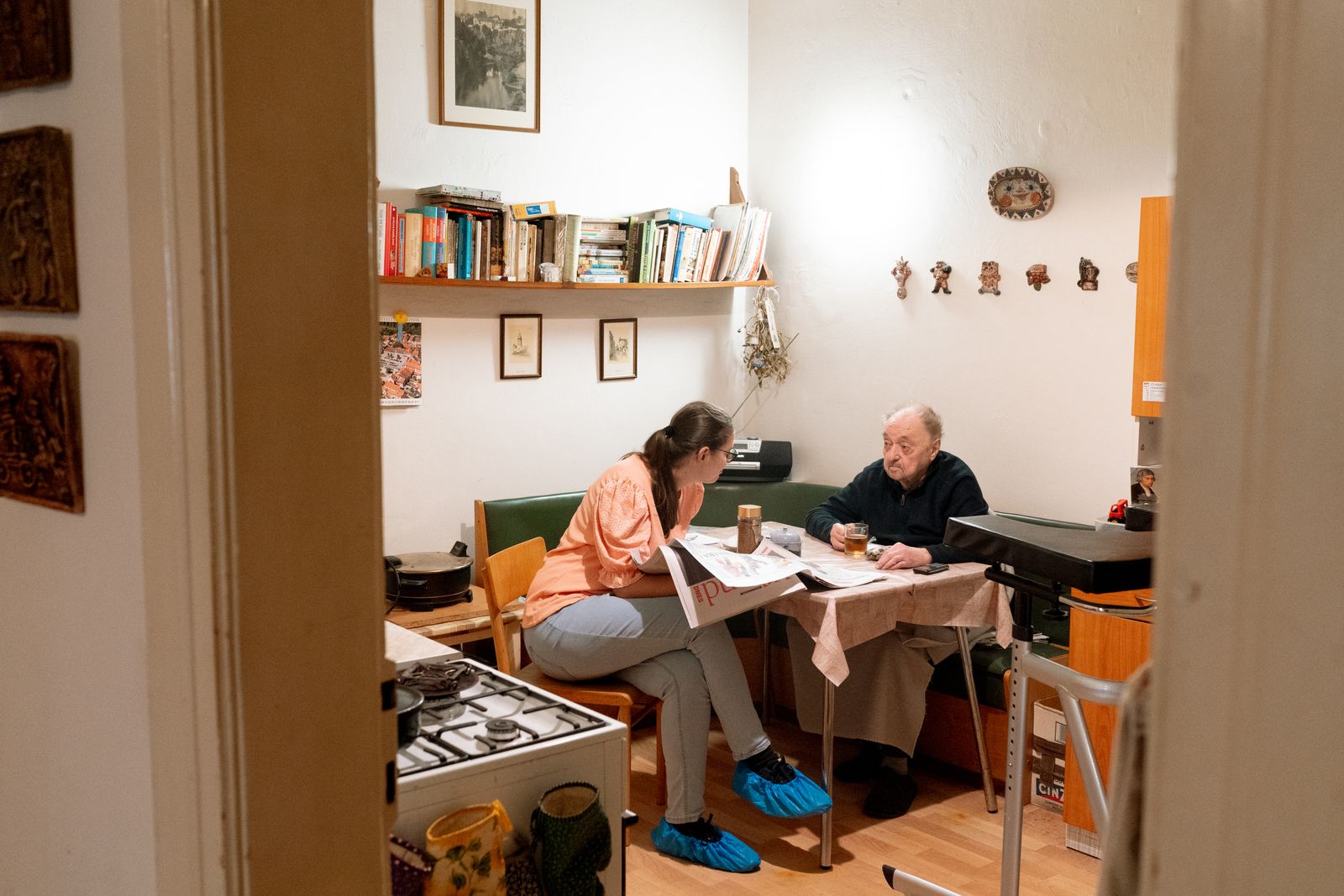
A caregiver reading the newspaper with an older man at his kitchen table
Check availability: (888) 793-1570